This is a sample post created to test the basic formatting features of the WordPress CMS.

Subheading Level 2

You can use bold text, italic text, and combine both styles.

  1. Step one
  2. Step two
  3. Step three

This content is only for demonstration purposes. Feel free to edit or delete it.

This is a sample post created to test the basic formatting features of the WordPress CMS.

Subheading Level 2

You can use bold text, italic text, and combine both styles.

  1. Step one
  2. Step two
  3. Step three

This content is only for demonstration purposes. Feel free to edit or delete it.

This is a sample post created to test the basic formatting features of the WordPress CMS.

Subheading Level 2

You can use bold text, italic text, and combine both styles.

  1. Step one
  2. Step two
  3. Step three

This content is only for demonstration purposes. Feel free to edit or delete it.

This is a sample post created to test the basic formatting features of the WordPress CMS.

Subheading Level 2

You can use bold text, italic text, and combine both styles.

  1. Step one
  2. Step two
  3. Step three

This content is only for demonstration purposes. Feel free to edit or delete it.

This is a sample post created to test the basic formatting features of the WordPress CMS.

Subheading Level 2

You can use bold text, italic text, and combine both styles.

  1. Step one
  2. Step two
  3. Step three

This content is only for demonstration purposes. Feel free to edit or delete it.

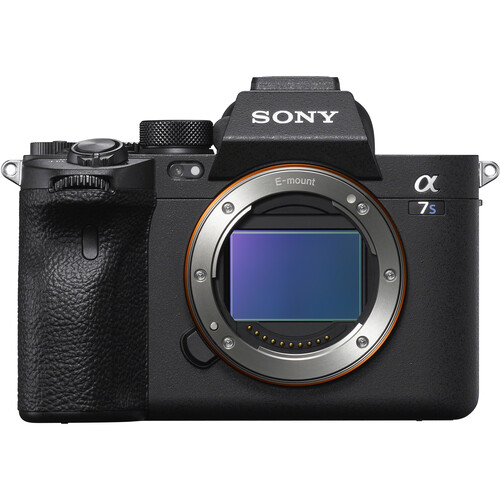
Key Features

  • 24MP Full-Frame Exmor R BSI CMOS Sensor
  • BIONZ X Image Processor & Front-End LSI
  • 693-Point Hybrid AF System
  • UHD 4K30p Video with HLG & S-Log3 Gammas
  • 2.36m-Dot Tru-Finder OLED EVF
  • 3.0″ 922k-Dot Tilting Touchscreen LCD
  • 5-Axis SteadyShot INSIDE Stabilization
  • ISO 204800 and 10 fps Shooting
  • Built-In Wi-Fi and NFC, Dual SD Slots
  • USB Type-C Port, Weather-Sealed Design

Permit Application in Nepal

Thanks to Nepal’s great versatility in terms of geography and culture, the Himalayan country has evolved to become one of Asia’s hottest destination for filming. The high affordability means hundreds of filmmakers flock into the country every year to shoot a portion or the entire length of their film in Nepal. The Nepal Government’s proactive approach to promoting tourism in the country has made it very easy to acquire filming permits. However, just acquiring a permit and wishing to film in Nepal is not enough. Since a lot of film footages are shot in sites of attraction and reflect the Nepalese lifestyle, the Nepal Government keeps a watchful eye.

How Film Crew Nepal will come into play?

First of all, all foreign filmmakers have to hire a local and licensed coordinator. The coordinator will then represent the filmmaker for acquiring any necessary permit. They will also be responsible for representing the film company in any circumstance arising both during and after the end of filming in Nepal. Working with a film production company representing a coordinator is necessary. For both parties’ advantage, an agreement letter must be signed on mutual understanding.

FCN will play the part of your coordinator and manage the tedious and time-consuming paperwork for you. We will not just help you with obtaining your film permits, but also give you advice on customs clearance and tax payment.

Based on the nature of the film, you will require different types of filming permits. In addition to that, different filming locations demand different types of permits.

Following are the types of film permits necessary for filming in Nepal:

  1. Nepal Filming Permit (Mandatory): The Ministry of Information and Communication provides the permit to the local coordinator and foreign film maker for filming in Nepal except for heritage areas and other sensitive areas. This permit is required in order to get the custom clearance done and other necessary documentation for filming. A Liasion officer is provided by the ministry in order to aid the filming in any region of Nepal related to all legal and diplomatic procedures. This provision not only helps to monitor sensitive issues while filming but also to support against any kind of diplomatic barriers while filming in Nepal.
  2. Heritage Areas Filming Permit:The Department of Infrastructure provides this permit for filming in any heritage sites in Nepal. Such as, all three Durbar Squares, Pashupatinath Temple, Swyambhunath (Monkey) Temple, etc. This permit issues a limited time permission to film in any heritage sites in the country for foreign filmmakers. 
  3. Private Property Filming Permit: Private owners for film locations provides a permit for filming in film locations provided. This is a letter of agreement normally provided by the owner to the film crew for film production. For example, Hotels, Resorts, Villas, etc.
  4. Public Area Filming Permit: Some properties own by the government requires additional permitting for filming due to sensitive issues. This permit provides access to some of the public areas for filming, such as streets, town, Highways, etc.
  5. National Parks Filming Permit: Nepal has 29 National parks from east to the west. National Parks in Nepal holds some of the rare wildlife which are endangered. Filming in some of the national parks are prohibited while some are easily accessible to the filmmakers. Some of the permits are Sagarmatha National Park Permit, Annapurna Conservation Area Permit, etc.
  6. Drone Permit: Drones are prohibited in most of the parts of Nepal. Areal Imaging in heritage areas is not permitted and considered illegal. Although drone permit is issued to filmmakers to film in other locations. Local licensed drone operators are available for foreign filmmakers for hire to avoid all the procedures saving time. Latest update for Drones available have already restricted areas not allowed to film. Drone permit is provided with the National filming permit with the time duration as mentioned in the same.

Check out some of our latest blogs at https://www.filmcrewnepal.com/blog/

Know more about trekking permission in nepal https://www.immigration.gov.np/page/about-trekking-permit

Filmmakers are flocking in several thousands to translate the ethereal beauty of film locations in Nepal into their movies. Let’s start this off by saying Nepal is very safe. But again, there are a thousand different versions of safety. The country is famous for its ancient monasteries, fabulous trekking routes, and friendly locals. But lately, it has been building a reputation amongst film companies as a budding and affordable destination for filming. 

As a foreign filmmaker filming in Nepal, the safest bet is to collaborate with a film company in Nepal itself .

Given the country’s third-world status, filmmakers often have questions regarding the country’s safety status. Politically, Nepal is more stable than it has even been in decades, and crime is not a significant risk for travelers. Moreover, the government’s hands-on approach to promote Nepal as a popular tourist and film destination has made it easier for film production companies. The government aims to promote film locations in Nepal via local international filmmakers. However, you can come across some minor inconveniences that can be easily avoided if you follow some simple safety measures.

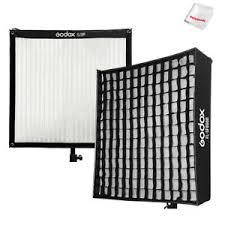
filming-with-portable-lights
Godox FL100 with soft box.

Nepal is synonymous with trek and adventure. The Himalayans and high hills are the most sought-after film locations in Nepal, but getting there along with your crew and filming equipment, in addition to spending weeks on end in such challenging terrain is not an easy feat. There are looming risks of altitude sickness, frostbite, and natural calamities. Thus, it is desirable to travel through a licensed tour operator or film company in Nepal, who are familiar with the destination. Also, make sure to do some background check on your guide and your travel insurance. In case of an unwarranted situation, there are several organizations like the Nepal Mountaineering Association and Himalayan Rescue Association that will help you with your difficulties.

Taking portable LED lights and solar powered cells while traveling for filming in Nepal, is the best option as Film Crew Nepal provides pelican boxes, solar panels, portable lights, etc.

As an international film company filming in Nepal, the safest bet is to collaborate with a film company in Nepal itself. This will help you reduce your travel expenses significantly, as you don’t have to go through the troubles of shipping large filming equipment in Nepal. It won’t only help you curb custom fees but also the hefty extra baggage charges at check-ins. The other advantage of partnering with a local film company in Nepal is that you will be working with people who know the local language, customs, and terrain. It will help to significantly reduce country-specific risks.

Since many of Nepal’s roads are damaged or unfinished, traveling long distances can be troublesome. Traffic is not properly regulated, so the streets can be chaotic as well. Since the film crew will be traveling in a group with filming equipment to multiple film locations in Nepal, a reserved tourist bus is your safe bet. For places where the road isn’t suitable for buses, jeeps and pickups can easily be hired.

While Shooting and operating as a foreign film production company in Nepal, it is best to avoid making political gestures through the film or real-life actions, as they can prove to be very unpredictable and volatile. Make sure you or your crew members don’t make any political or religious statement to offend the local sentiment and monitor the local news in case of any circumstances arise. In case of a curfew or strike, avoid traveling by road in rented vehicles.

Check out some of our latest blogs at https://www.filmcrewnepal.com/blog/

Get to know about some equipment for filming https://www.pinterest.com/aarontkacheve/diy-film-equipment/

by Rupak Risal

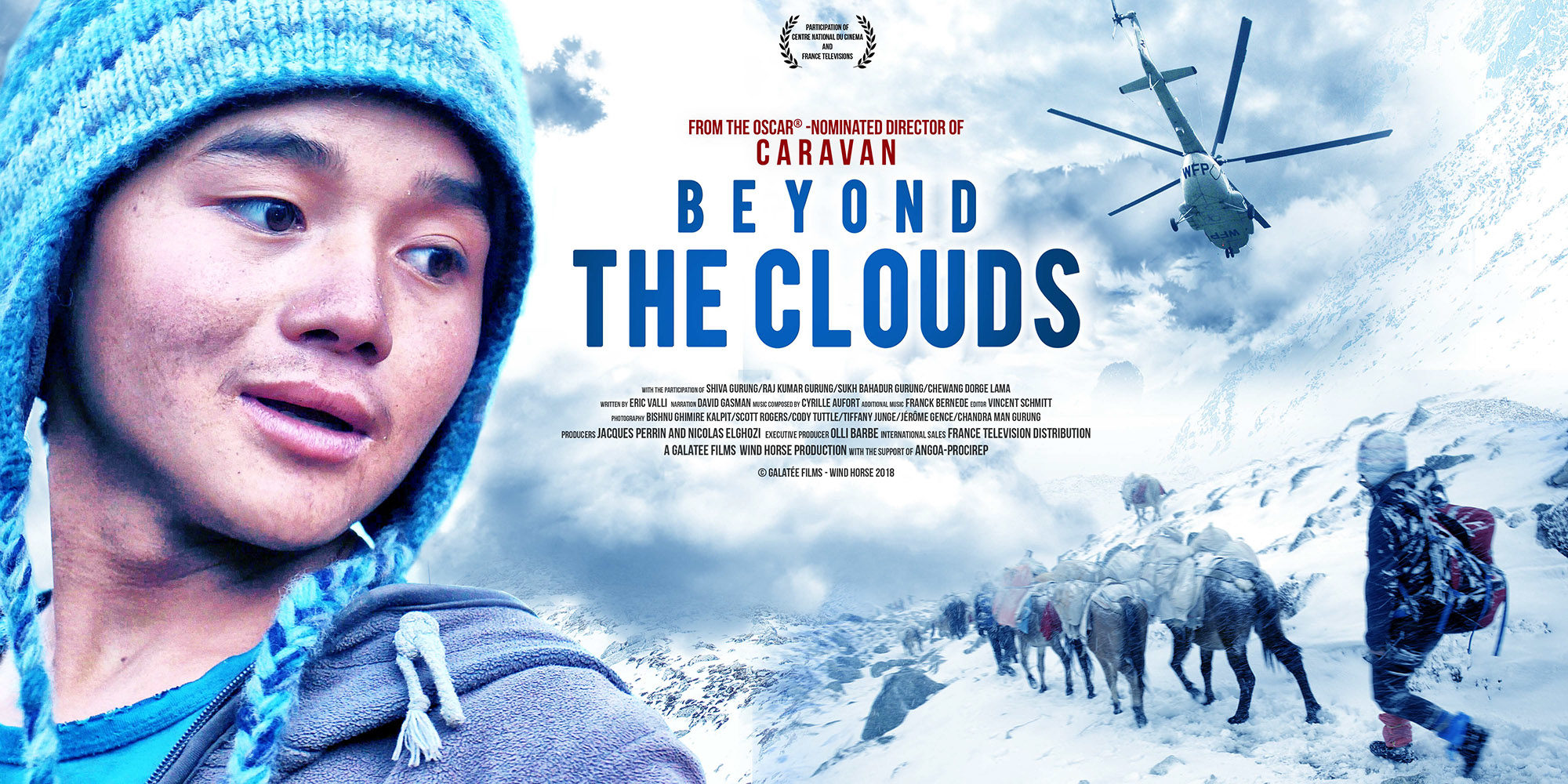
BEYOND THE CLOUDS, playing at theatres near you is the story set in Nubri valley that lies to the North of Mt. Manaslu, one of the highest mountains in the world. After the earthquake of 2015, Nubri valley with around 12,000 people is cut from the rest of the world by landslides. This docudrama tells the story of Raj, Shiva, Sukh Bahadur and ChhewangDorje, brought together by fate. They unintentionally end up helping the valley residents make it through the near approaching winter, while making their own ends meet.

Director Eric Valli, widely known for HONEY HUNTERS and CARAVAN is the best friend and admirer of Nepal. No one has ever dished out Nepal’s beauty through cinema to the rest of the world better than him. He has proven that through BEYOND THE CLOUDS once again. The cinema crew follows the porters and mule herders carrying goods in the Manaslu circuit, even crosses the infamous Larkya pass on multiple occasions and showcases the hardship of lives around the Manaslu region. A huge round of applause goes to Valli for putting a team together and literally walking along with the characters on location.

A huge round of applause goes to Valli for putting a team together and literally walking along with the characters on location.

The movie is successful in capturing stunning visuals of Manaslu circuit. Characters show real emotions when they are being interviewed. The movie depicts lives full of hardship in one of the most rigorous terrains in the world. Cinematographer Bishnu Kalpit has done a very commendable job in capturing the beauty of the Himalayas and its rugged landscapes. Background score is another strong aspect of the movie. It helps give more sense of reality on multiple occasions as well as being enjoyable to listen to.

However, the film gets occasionally lost in itself and turns into a slice of life in the Himalayas that started as a post-earthquake hardship docudrama. I am sure Eric meant it to be the latter as he ends the film in that note. However, a huge chunk of the movie in the middle wanders off towards showcasing Chhewang Dorje’s life and his philosophical dilemma, which is sure to distract the audience from the theme of earthquake and recovery. Characters seem really animated on scores of occasions and just ham through the entire scenes. Eric was successful in extracting much better performances from real life characters in CARAVAN. A large part of the narration sounds too loud to the viewers, perhaps subtitles could do much better a job.

If viewers can take one of the characters’ decision on not to go abroad at the end as a mere reenactment, the movie can also excuse itself from being preachy.

BEYOND THE CLOUDS ends on a note that life in the Manaslu region has worsened because of the earthquake. People do not have resources available to reconstruct their houses within the country so they are thinking of going abroad. However, because of the earthquake people have begun to realize the importance of unity. The now come to help for each other and have started sharing ideas on recovery process. If viewers can take one of the characters’ decision on not to go abroad at the end as a mere reenactment, the movie can also excuse itself from being preachy.

Trekkers, adventurers and mountain lovers will enjoy the movie for its sheer visual excellence.

Director : Eric Valli
Camera : Bishnu Prasad Ghimire
First published in : moviemandu.com

by Ram Chhetri

The Himalayas are regarded as sacred power places on earth. They are revered for their spiritual benefits and this translates, literally, into the “Abode of the gods!” There is a spirituality and wonderment in these peaks that haunts the insignificance of mankind. There is something magical and wonderful about the Himalayas!.

The early morning was crisp and clear. A few clouds scudded across the blue sky. I had checked in with the helicopter crew and was told it would be a few minutes. This time gave the crew a chance to check the weight and other items before we departed. As we approached the landing strip at Lukla, it suddenly struck me just how busy the small airfield was in the early morning hours. Planes and helicopters appeared to vie with one another for a space, both on the ground and in the air. Morning was the best time to fly into Lukla and I quickly realized the need for a cut off time to fly the 40 minutes from Kathmandu to Lukla. I wanted to try, this time, to see the grandeur of the Himalayas on a crisp, clear day.

Lukla Airport (Tenzing–Hillary Airport), built in 1964 considered among one of the dangerous airports in the world but I never felt that dangerous in my early days. A program titled The Most Extreme Airports, broadcast on the history channel in 2010, rated the most dangerous airports in the world for over 20 years. A gateway to Everest where most people start Everest Base Camp Trek. There regular flights To/From Kathmandu.

Lukla Airport (Tenzing–Hillary Airport), built in 1964 considered among one of the dangerous airports in the world but I never felt that dangerous in my early days. A program titled The Most Extreme Airports, broadcast on the history channel in 2010, rated the most dangerous airports in the world for over 20 years. A gateway to Everest where most people start Everest Base Camp Trek. There regular flights To/From Kathmandu.

The mountains did not disappoint! After a 40 minute flight over many different villages, the helicopter landed at Lukla Airport in the Solu Khumbu region of Nepal. This region is considered the cradle of Sherpa culture, home to the legendary Sherpa people of Nepal. They are famed for their historic treks and climbs of many of the Himalaya’s highest peaks. They also accompany and lead many groups of climbers up the mountains, including the Mt. Everest! The ideal time to fly into Lukla is in the morning hours. It is at this time that the light and shadows are the most spectacular on the mountains! I walked up to the Lukla Airport office to visit my friend. He talked a great deal about the expansion of the airport, and an increase in the capacity of the airport to handle upwards of 400 passengers.

starrynight

His office is small, but cozy. A single window faces the runway with unexpected and stunning views of planes and choppers landing and taking off. From this vantage one can see all the flights landing and taking off. I sip a cup of tea, watched clouds moving over Konde – Ri, watched a pilot near the runway below, waving his hands, read his lips as he shouts, “Let’s go!”

7

Generations of explorers have taken several weeks, or even months, to reach these heights! Although only 50 minutes from Kathmandu, one must achieve this location to overnight at 13,950 feet. This is an increase from 4,430 feet.

The next adventure would be to land at Kongde for an overnight. A beautiful experience! The weather in this region commands no respect. While landing, a moment ago, the deafening clatter of the helicopter blades made a similar sound as if there was an avalanche! We had arrived just below the Konde – Ri Summit. Now, I am having a cup of butter tea in a small room with a fireplace. I can only hear the chanting of Om Mane Padme Hum, a Buddhist chant in the background. For an hour, I absorbed all the energy of the world. I strolled around and waved at a monk who was burning fresh, dry juniper as incense on cones. It is believed that those juniper trees are the hairs of a Buddhist leader and if they cut live wood, dry it, they will face no illness or bad luck.

p1

The Himalayas are regarded as sacred power places on earth. They are revered for their spiritual benefits and this translates, literally, into the “Abode of the gods!”

Getting into Yeti Mountain Home, Kongde, requires 5 days trek through high alpine terrain, Sherpa villages and Buddhist shrines, streams, waterfalls, wild goat and sheep.

I suddenly felt the temperature swiftly drop and ghostly mists rose from Phakding and Namche, villages hidden by the rising mists. My breath grew shallow, pressure in my head increased and the altitude popped my ears! I ended up in a hall with a glass of thick, garlic tea – garlic it is believed to help thin the blood and enhance the flow throughout the body. At this point I did a quick body scan: I shook my head – no headache; I checked my stomach – no nausea; My respiration was smooth and deep now.

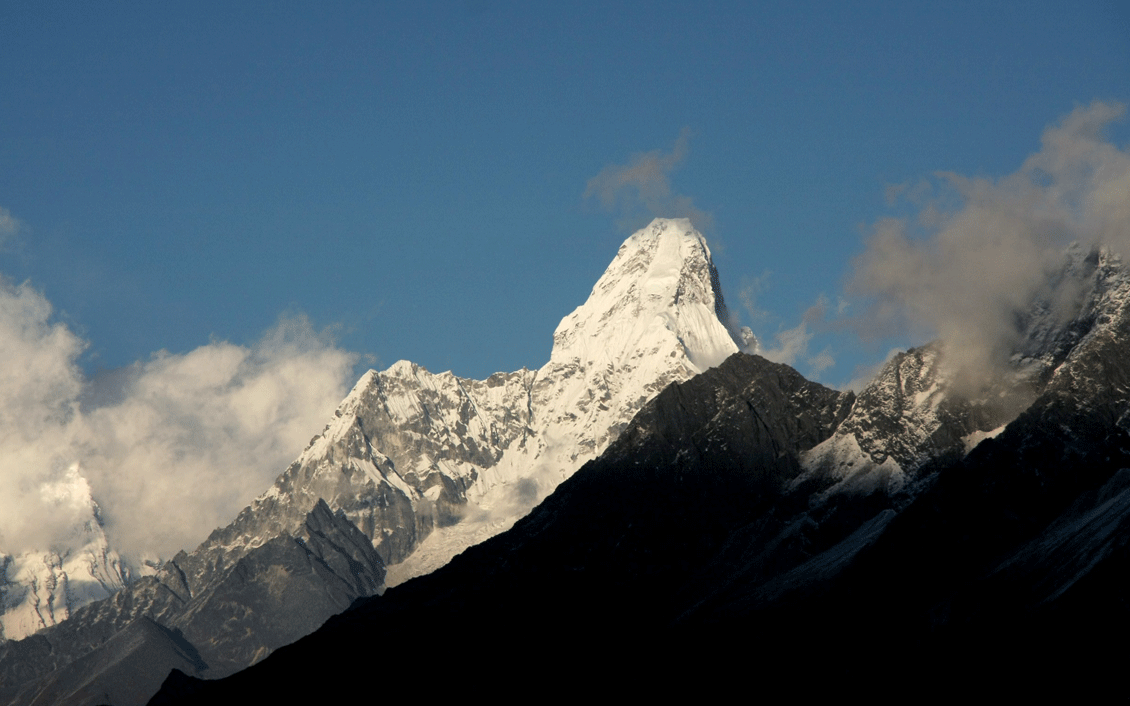
The wind, outside, suddenly stopped as if someone had hit a switch and all fell silent. Mt. Ama Dablam removed her veil of clouds and flashed an expansive smile of pure snow, rock and ice. Mt. Everest, with its symmetrical shape was mesmerizing. The whole new vista opened up, causing me to scream or in the excitement lose my dinner. I was without a thought and completely speechless for the longest time.

The Himalayas are regarded as sacred power places on earth. They are revered for their spiritual benefits and this translates, literally, into the “Abode of the gods!” There is a spirituality and wonderment in these peaks that haunts the insignificance of mankind. There is something magical and wonderful about the Himalayas!

My respiration remained rapid and my heart boomed a techno beat in my chest. Yet, I feel calm, content, and blessed to be here at all. Because of this wonderful environment, I truly discovered myself. There was something truly magical and wonderfully intangible about this place. A feeling that I know goes back thousands of years to the very first men who stood in this vastness that is the Himalayas.

Breakfast with gods in heaven

I awoke the next morning to the quiet stillness that seems to pervade these mountains. The tranquility of the dawn, the challenge of a new day, and the promise of so many new and magical experiences that await you. It is an awesome feeling to see the guardians of the Himalayas from this vantage point. There are four of the tallest mountains in the world and they have been labeled the guardians of the Himalayas! Mt. Everest, 8,848m/29,029 ft., Mt. Lhotse, 8,516 m/27,940 ft., Mt. Makalu, 8,481m/27,838 ft., & Mt. Cho Oyu, 8,201m/26,906 ft.. All of these Make you feel supremely happy. Mt. Everest is glowing with its eternal reflection and its radiance. Mt. Ama Dablam, dominates the skyline with its colossal body covered with sparkling, white snow which only increases its beauty and majesty.

As the magnificent sunrise began, the Khumbu Valley is bathed in a golden halo.  My spirits soar as I gaze heavenward in a silent rapture.

Flying over Everest Base Camp and Kalapathar

The sound of a helicopter shatters the morning stillness.  Rising up from the valley below, it signals an end to our enchanting and mystical rendezvous with these spectacular mountains. There is little time to think on the experience, yet I know that I will think back on all of this as I return to the modern world.

The next stop is Kalapathar.  Here the helicopter does not turn off its rotors, but allows them to stay engaged. If the motor should die we would be stuck in this altitude, and cold.  The chopper would not be able to restart again because of the lack of oxygen and the extremely cold conditions.

5

Namche Bazaar spread out below the chopper, was stunning. Syangboche, the Everest View Hotel and then the incredible Tengboche Monastery, Gorekshep, was a real eye-opener as Buddhist shrines, chortens, and Sherpa villages dotted the seemingly endless flow of this vivid, surreal landscape.

Mt. Pumori seems like it is a welcoming signal to every helicopter and passenger plane returning from the mountains. As Kalapather (5,550m), it was an awesome experience to land there, and although the chopper kept its engine running, the beauty and the silence seemed to quiet the noise.

A magical experience: yes! A mystical experience: yes! But I returned to the modern world refreshed and stimulated to join back totally refreshed to the modern world of today!

(Ram Chhetri is one of the prominent tour and trek agent and has been in this business for a long time. This blog is his personal experience of witnessing this heavenly place.)
Check out some of our latest blogs at https://www.filmcrewnepal.com/blog/

Know more about Everest at https://www.en.wikipedia.org/wiki/Mount_Everest